
Last Updated: November 8, 2026
Quick Summary
A 10×10 trade show booth is a 10-foot-wide, 10-foot-deep exhibit space totaling 100 square feet, the most common entry-level footprint on any show floor. Plan it by keeping the front two feet open for traffic, reserving the back eight feet for selling, and choosing one focal point instead of cramming in furniture.
- A 10-foot-wide booth usually fits one backdrop, one counter, and either a demo station or a small seating area.
- Check each show’s height and line-of-sight rules in writing before graphics go to print.
- Median all-in exhibitor spending reached $32,400 in 2025, up 14% from 2022.
- Place the counter first, not last, and add only one focal point to avoid shrinking perceived space.
- A good kit includes the frame, printed graphics, a carrying case, and clear setup instructions.
Table of Contents
- 10×10 Trade Show Booth Dimensions and What They Mean for Your Layout
- 10×10 Trade Show Booth Ideas That Fit a 100-Square-Foot Footprint
- What to Look for in a 10×10 Trade Show Booth Kit
- Choosing a 10×10 Booth Backdrop: Tension Fabric, Backlit, and Beyond
- Budget, Shipping, and Setup: The Costs Competitors Skip
- Ordering Your Custom 10×10 Booth Display
- Frequently Asked Questions
10×10 Trade Show Booth Dimensions and What They Mean for Your Layout
A 10×10 trade show booth is a 10-foot-wide, 10-foot-deep exhibit space totaling 100 square feet, the most common entry-level footprint on any show floor.
A 10-foot-wide booth usually fits one backdrop, one counter, and either a demo station or a small seating area. Pick two of those three; all three makes the booth feel like a closet with carpet.
Depth matters as much as width. The front two feet belong to traffic flow; the back eight are yours for selling. Keep graphics at the back edge so attendees can read them from the aisle, and leave the front open.
Height Limits and Line-of-Sight Rules Vary by Show
Standard booth height is often assumed to be 8 feet, but that number is not universal. Expo Marketing’s booth sizing guidance advises exhibitors to check each show’s specific height limitations before ordering, and Featherlite’s exhibit rules overview notes that line-of-sight requirements vary by organizer and venue.
Translation: a booth that cleared one hall can get flagged in the next. Ask the organizer for height and sightline rules in writing before graphics go to print, rebuilding a backwall costs far more than a five-minute email.
10×10 Trade Show Booth Ideas That Fit a 100-Square-Foot Footprint
The best 10×10 trade show booth ideas use vertical space and a single focal point rather than cramming in furniture. Median all-in exhibitor spending reached $32,400 in 2025, up 14% from 2022 (ExpoFP exhibitor spending data), so every square foot has to earn its keep.
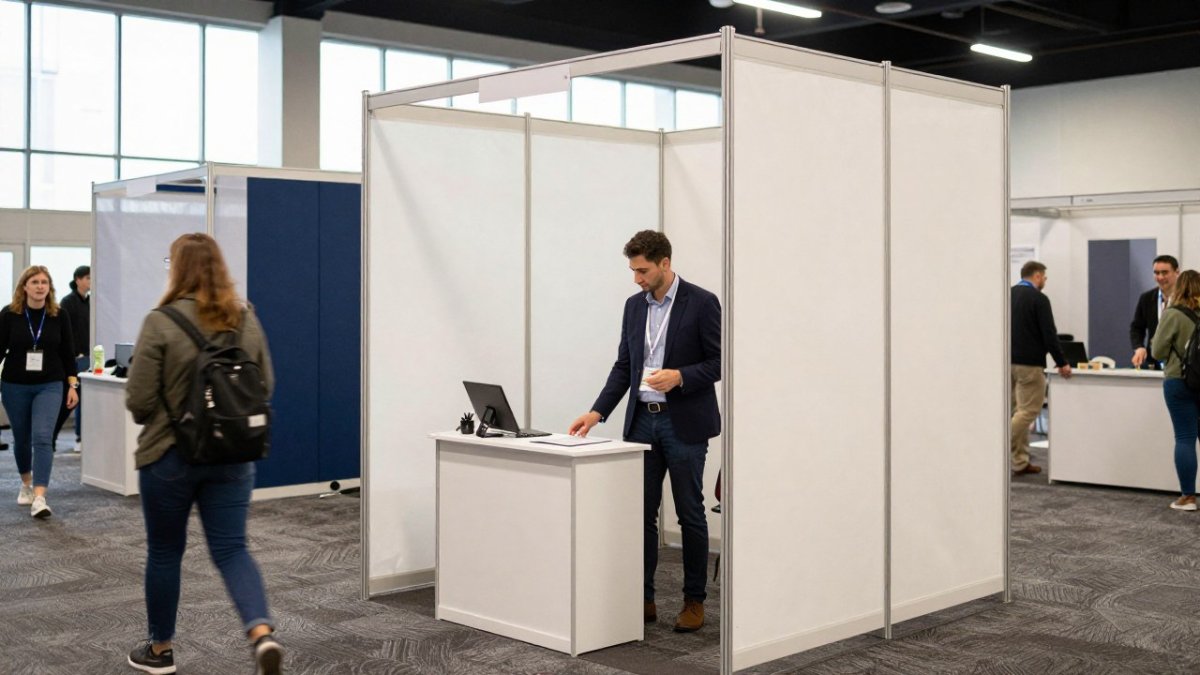
Three configurations we see work repeatedly:
- The backdrop-first layout: full-height tension fabric graphic across the back, one counter, open floor. Best for brand visibility.
- The demo pod: a single product display at the front corner and a monitor stand, with the backwall carrying the message. Best for hands-on products.
- The meeting nook: small table and two chairs at the back, graphics on the sides. Best for booked appointments.
If you want a concrete example of a complete design rather than a description, our 10×10 booth kit with a tapered arch and 3D circle backdrop shows how much visual weight a compact footprint can carry.
Plan the Footprint Before You Pick Furniture
A 10×10 booth is 100 square feet, and usable selling area shrinks once you subtract circulation. This sequence keeps the layout from collapsing into a closet with carpet:
- Mark the front two feet as traffic zone. Nothing should block it, and graphics must be readable from it.
- Reserve the back eight feet for selling. Place the backwall at the rear edge, then work forward.
- Place the counter first, not last. Put it to one side for an open entry, or center-front to filter casual browsers from serious buyers.
- Add one focal point. A demo station, monitor, or seating area, pick one; two split attention and shrink perceived space.
- Leave a clear path to the lead-capture device. Visitors should walk past your product display to reach it.
- Check aisle clearance. Keep furniture inside your 100 square feet so you do not encroach on neighboring booths.
Layouts for Different Traffic Goals
Match the layout to your goal. For booth traffic, keep the front open and put the counter to one side. For qualified conversations, a center-front counter filters casual browsers from serious buyers.
Traffic patterns matter too. A corner booth gets two open sides and rewards a layout that reads from both aisles; a mid-row booth gets one open side and rewards a strong backwall plus a side graphic. An end-cap pulls traffic from the main aisle, so put your demo pod on the open corner.
One layout cannot do all three goals. Decide which goal matters most before you order, and confirm the booth position with the organizer so the layout matches the traffic you will actually get.
What to Look for in a 10×10 Trade Show Booth Kit
A good 10×10 trade show booth kit includes the frame, printed graphics, a carrying case, and clear setup instructions, all sized to ship as one package, the difference between a booth you assemble in twenty minutes and a box of parts you argue with at 7 a.m.
Check these before buying:
- Aluminum frame quality: lightweight but rigid, with labeled connections
- Tension fabric graphics: wrinkle-resistant, full-color printing, machine washable
- Tool-free assembly: no loose hardware to lose between shows
- Portability: a wheeled carrying case that fits standard shipping
- Replacement parts: can you reorder one connector, or must you rebuy the frame?
Watch out: cheap kits often skip the replacement-parts path, which means a single bent tube sidelines the whole display. Ask about it before you order.
You can browse complete 10×10 trade show booth kits built around these criteria to see how the components fit together.
Choosing a 10×10 Booth Backdrop: Tension Fabric, Backlit, and Beyond
Tension fabric is the default choice for most 10×10 booth backdrops because it prints edge to edge, packs flat, and resists wrinkles in transit. It pulls taut over the frame for a seamless full-color graphic instead of panels with visible seams.
Modular and more sustainable booth designs are among the trends reshaping exhibit marketing, according to Taylor’s exhibit trend reporting, and tension fabric fits that shift well because the graphic swaps onto the same frame show after show.
If you want to see actual fabric tension backwall and backdrop options rather than read about them, our backdrop displays and fabric tension backwall banners page lays out the choices side by side.
Budget, Shipping, and Setup: The Costs Competitors Skip
Booth budgets are best measured as total cost of ownership across the display and frame, graphics, shipping, installation and dismantle labor, and storage between shows.
| Cost Line | What It Covers | Where It Surprises People |
|---|---|---|
| Display and frame | Structure, hardware, carrying case | Replacement parts pricing; a single bent tube can sideline a kit |
| Graphics | Custom printing, full-color backwall, table throw | Reprints after a design change, plus rush-production premiums |
| Shipping and drayage | Round trip to each show, plus venue handling | Drayage is billed by weight and charged separately from freight |
| Installation and dismantle | Your time or hired labor | Overtime rates for late setup and straight-time minimums |
| Storage and replacement | Between-show storage, graphic refresh, spare parts | Graphics fade and frames wear; budget a refresh cycle |
The display and graphics are often the smallest part of a multi-show budget once drayage and labor are counted.
Rental versus purchase changes the math, so ask for both quotes against your show calendar, not a single event.
Pricing depends on size, graphics, and quantity, so ask for a quote rather than guessing from a list price. On the accessory side, a printed square or round table top throw and custom promotional table covers are the cheapest way to make a bare booth look finished, and the cheapest thing to replace when branding changes.
Confirm the advance warehouse deadline versus direct-to-show delivery with the show’s service contractor before you ship, and store the case properly between shows.
Ordering Your Custom 10×10 Booth Display
Ordering starts with three facts: your show dates, your booth’s height and sightline rules, and your final artwork. Confirm those before anything goes to production.
Since 1987, Trade Show Displays LLC has produced custom-printed displays through a dedicated trade show department.
Planning a booth is mostly a sequence of small decisions made in the right order, and the exhibitors who get it right confirm rules and artwork before they confirm the order. Trade Show Displays LLC handles custom printing, fabric backwall banners, and table covers, with a dedicated trade show department. Get started with Trade Show Displays LLC and walk into your next show with a booth that is ready before the doors open.
Frequently Asked Questions
What is the standard size of a 10×10 trade show booth?
A 10×10 trade show booth measures 10 feet wide by 10 feet deep, giving you 100 square feet of exhibit space. Standard booth height is usually 8 feet, but that is not universal. Height limitations and line-of-sight rules vary by show organizer and venue, so confirm the rules for each event before you finalize a backdrop or tower design. Your booth kit, counter, and lighting all need to fit inside those limits.
What is the best layout for a 10×10 trade show booth?
The best layout depends on your goal. If you want to stop foot traffic, place your backdrop on the back wall and angle a counter toward the aisle so staff can greet people without blocking the entrance. For demos, keep one side open and push shelving to the rear corners. For private conversations, use a corner counter as a soft barrier. Sketch the layout on paper first, then walk the 100 square feet to confirm you have room for people, not just products.
How much does a 10×10 trade show booth cost?
Costs vary widely by configuration, graphics, and accessories, so there is no single figure. Pricing for a 10×10 trade show booth kit depends on quantity, dates, and delivery. Request a quote from Trade Show Displays LLC for current pricing on custom-printed backdrops, counters, and kits.
What display works best as a 10×10 booth backdrop?
A tension fabric backdrop on an aluminum frame packs into a carrying case and prints edge to edge in full color. Backlit displays cost more but hold attention in dim halls. Confirm the show’s height limit before ordering, since some venues cap displays below the usual 8 feet.
